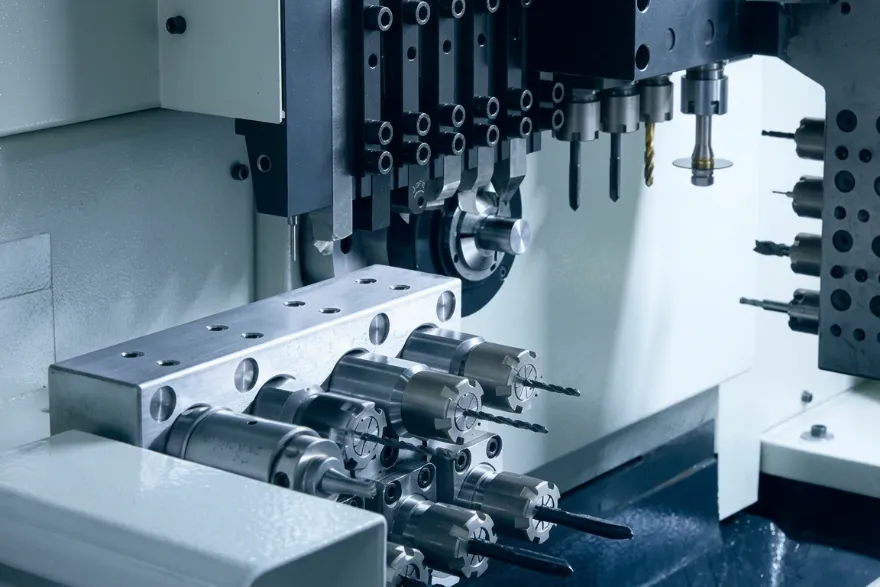


Swiss turning and conventional CNC turning both produce accurate round parts, but they shine in different size, length and volume regimes. Choosing early avoids requoting and mid-programme process changes.
When Swiss turning is the better path
Swiss-type lathes support the bar close to the cutting zone, which keeps slender parts stable and lets us combine turning, drilling and milling in one setup. Classic CNC turning is often faster and more economical when diameters are larger and overhang is short.
Lean toward Swiss turning when you need:
- Small diameters with high length-to-diameter ratios
- Tight concentricity between turned and milled features
- Secondary ops (cross holes, flats, threads) in one cycle
- Consistent quality on long production runs from bar stock
- Minimal deflection on thin walls or deep grooves
- Lights-out bar-fed production with stable process capability
Divine Precision runs both cells. We recommend the route that protects tolerance and cycle time rather than forcing every part onto one platform.

Seven decision factors we weigh
1. Diameter and L/D ratio
Slender parts benefit from bushing support; short, stiff parts often stay on CNC turning.
2. Feature mix
Cross drilling, milling and threading in one setup favour Swiss when volumes justify the programme.
3. Material behaviour
Gummy aluminium and tough stainless react differently to support and chip control.
4. Volume and bar size
Bar-fed Swiss wins on repeating SKUs; chucker-style CNC wins on billets and larger blanks.
5. Surface and tool pressure
Delicate finishes and thin walls need support strategies Swiss provides naturally.
6. Lead time to first article
Simple OD/ID parts can be faster on CNC turning with existing tooling.
7. Total cost of quality
Scrap, secondary ops and inspection often outweigh a slightly longer cycle.
Quick comparison for small precision parts
Use this as a conversation starter with our applications team — final routing depends on your drawing and annual volume.
| Factor | Swiss turning | CNC turning |
|---|---|---|
| Best diameter band | Typically under ~32 mm | Broader, including larger OD |
| Slender / long parts | Excellent support | Needs steadies or shorter overhang |
| Live tooling in one setup | Common and efficient | Available; often separate ops |
| Bar-fed production | Standard | Possible; less common for micro parts |
If you are unsure, send both the 3D model and the target volume. We will quote the process that holds your critical diameters without unnecessary cost.
Many programmes start on CNC turning for prototypes and move to Swiss once the geometry and volume settle — we plan both paths when it helps.
What to include in the RFQ
Call out critical diameters, concentricity, material grade and any secondary finishes. Note whether parts ship as-machined or need plating or passivation.
Upload STEP or DXF with the print. Divine Precision will confirm Swiss versus CNC routing, tooling risk and lead time with the quotation.